

La legge sull’informazione a San Marino, se conosciuta all’esterno del Paese, potrebbe avere effetti devastanti sul piano dell’immagine internazionale e creare seri problemi anche nel percorso di chiusura dell’Accordo di associazione con l’Unione Europea. Una legge che rischia di mostrare al mondo il volto più illiberale e nascosto dello Stato.
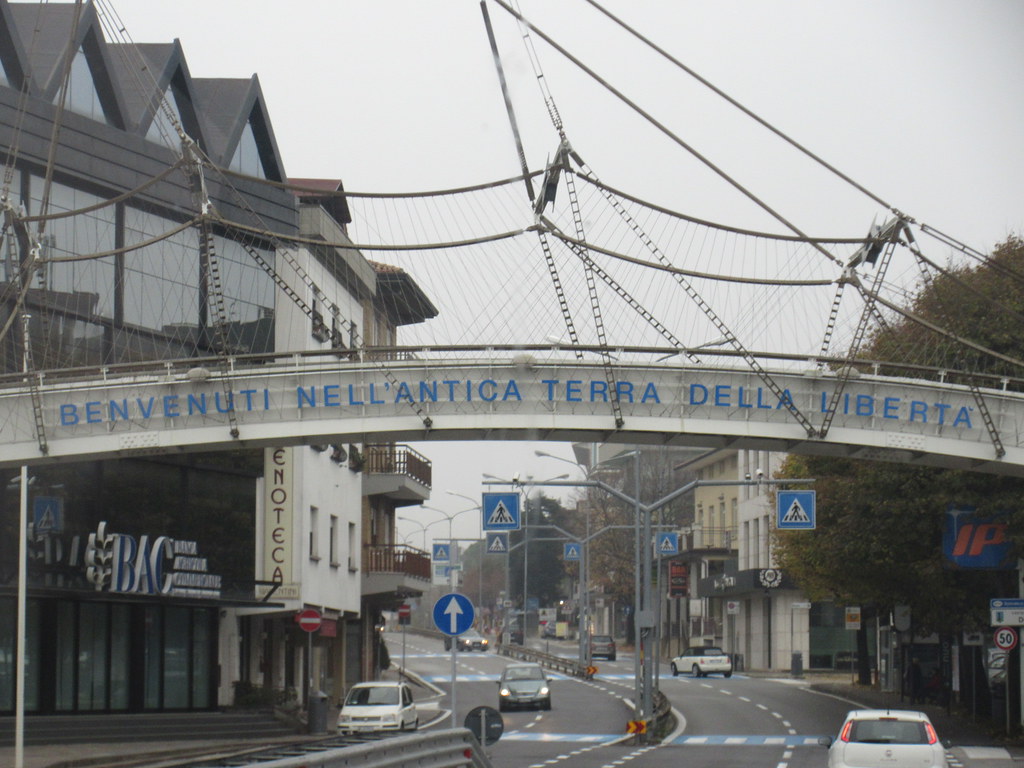
Per capire perché la legge sammarinese sull’informazione sia problematica anche oltre i confini del Titano, occorre guardare due articoli chiave della Legge n. 40 del 2023, la cosiddetta legge Lonfernini che prende il nome dall’attuale Segretario di Stato (ministro) Teodoro Lonfernini
Il primo è l’articolo 12, comma 2, introdotto da un emendamento voluto dal leader dell’opposizione Nicola Renzi, del partito Repubblica Futura. Questa norma stabilisce che l’Autorità Garante per l’Informazione di San Marino può intervenire non solo sui media sammarinesi, ma anche su siti web, blog e mezzi di informazione esteri che parlino “in maniera ricorsiva” della Repubblica di San Marino.
Il punto critico è proprio questa parola: ricorsiva.
La legge non la definisce. In pratica significa che basta parlare più volte di San Marino. Anche solo due. Anche facendo cronaca, analisi o inchieste. … anche bancarie.
Un’impostazione surreale. Tutti i media del mondo, teoricamente, sono avvisati: San Marino potrebbe sanzionarvi se parlate delle nostre cose. Una barzelletta giuridica, venuta male.
Il secondo articolo decisivo è l’articolo 28. Qui la legge diventa estremamente concreta. Stabilisce che tutti gli organi di informazione soggetti alla normativa e quindi, secondo questa logica anche quelli esteri che parlano di San Marino, devono comunicare ogni anno, entro il 31 luglio, all’Autorità Garante:
•chi finanzia l’attività giornalistica,
•chi acquista spazi pubblicitari,
•chi è il proprietario della testata,
•il bilancio dell’editore.
Il mancato adempimento comporta sanzioni amministrative fino a 10.000 euro.
Mettendo insieme questi due articoli nasce il cortocircuito. Se un quotidiano italiano, un sito di informazione o una testata online estera scrive più volte di San Marino, rientra nel concetto di “ricorsività”. A quel punto, secondo la lettera della legge, finisce sotto la giurisdizione sammarinese e dovrebbe rispettare anche gli obblighi dell’articolo 28 e se non lo fa viene multato, anche 10.000 euro.
Il risultato è devastante: una norma che pretende di estendere l’efficacia di una legge nazionale oltre i confini dello Stato, imponendo obblighi amministrativi e minacciando sanzioni economiche a soggetti sui quali San Marino non ha alcuna competenza giuridica.
Questo significa che San Marino possa realmente multare Il Corriere della Sera, Il Resto del Carlino o altri media, anche internazionali, ma anche qualcosa di molto più sottile e pericoloso: ovvero creare un clima di pressione e intimidazione, soprattutto verso chi si occupa di temi sensibili come scandali bancari, giustizia o finanza.
In diritto europeo questo effetto ha un nome preciso: chilling effect. Non serve una multa per limitare la libertà di stampa. Basta la minaccia, l’incertezza, l’idea che “qualcuno possa occuparsene”.
Ed è per questo che la legge sammarinese sull’informazione non è solo una questione interna. Tocca direttamente il principio della libertà di stampa e dell’informazione transfrontaliera, un principio tutelato a livello europeo in modo forte e inequivocabile e fa vedere che San Marino non è libera come vuol far vedere, tutt’altro.
Marco Severini – Direttore GiornaleSM

Saint-Marin contre tous les médias du monde : il suffit de parler du Titano, amende jusqu’à 10 000 euros
par Marco Severini, directeur de GiornaleSM
Il existe à Saint-Marin une loi qui, si elle était connue à l’extérieur du pays, pourrait avoir des effets dévastateurs sur le plan de l’image internationale et créer de sérieux problèmes dans le processus de conclusion de l’Accord d’association avec l’Union européenne. Une loi qui risque de montrer au monde le visage le plus illibéral et caché de l’État.
Pour comprendre pourquoi la loi sammarinaise sur l’information pose problème au-delà des frontières du Titano, il faut examiner deux articles clés de la loi n° 40 de 2023, dite loi Lonfernini, du nom de l’actuel Secrétaire d’État (ministre) Teodoro Lonfernini.
Le premier est l’article 12, paragraphe 2, introduit par un amendement voulu par le leader de l’opposition Nicola Renzi, du parti Repubblica Futura. Cette disposition prévoit que l’Autorité garante de l’information de Saint-Marin peut intervenir non seulement à l’égard des médias sammarinais, mais aussi à l’égard de sites web, blogs et médias étrangers qui parlent « de manière récurrente » de la République de Saint-Marin.
Le point critique est précisément ce mot : récurrente.
La loi ne le définit pas. En pratique, cela signifie qu’il suffit de parler plusieurs fois de Saint-Marin. Même seulement deux. Même en faisant de la chronique, de l’analyse ou des enquêtes. Y compris bancaires.
Une approche surréaliste. Tous les médias du monde sont, en théorie, prévenus : Saint-Marin pourrait vous sanctionner si vous parlez de nos affaires. Une plaisanterie juridique, mal tournée.
Le second article décisif est l’article 28. Ici, la loi devient extrêmement concrète. Elle prévoit que tous les organes d’information soumis à la réglementation — et donc, selon cette logique, aussi les médias étrangers qui parlent de Saint-Marin — doivent communiquer chaque année, au plus tard le 31 juillet, à l’Autorité garante :
- les personnes ou entités qui financent l’activité journalistique ;
- celles qui achètent des espaces publicitaires ;
- l’identité du propriétaire de la publication ;
- les comptes de l’éditeur.
Le non-respect de ces obligations entraîne des sanctions administratives pouvant aller jusqu’à 10 000 euros.
En combinant ces deux articles, on arrive à un court-circuit. Si un quotidien italien, un site d’information ou un média en ligne étranger écrit à plusieurs reprises sur Saint-Marin, il entre dans la notion de « récurrence ». À ce moment-là, selon la lettre de la loi, il tombe sous la juridiction sammarinaise et devrait également respecter les obligations de l’article 28. S’il ne le fait pas, il est sanctionné, jusqu’à 10 000 euros.
Le résultat est dévastateur : une norme qui prétend étendre l’efficacité d’une loi nationale au-delà des frontières de l’État, en imposant des obligations administratives et en menaçant de sanctions économiques des sujets sur lesquels Saint-Marin n’a aucune compétence juridique.
Cela ne signifie pas que Saint-Marin puisse réellement infliger des amendes à Il Corriere della Sera, Il Resto del Carlino ou à un média international — comme par exemple EUalive, qui s’occupe ces dernières semaines du scandale des capitaux bulgares et de la Banca di San Marino. Mais cela signifie quelque chose de beaucoup plus subtil et dangereux : créer un climat de pression et d’intimidation, surtout à l’encontre de ceux qui traitent de sujets sensibles comme les scandales bancaires, la justice ou la finance.
En droit européen, cet effet porte un nom précis : chilling effect.
Il n’est pas nécessaire d’infliger une amende pour limiter la liberté de la presse. Il suffit de la menace, de l’incertitude, de l’idée que « quelqu’un pourrait s’en occuper ».
C’est pour cette raison que la loi sammarinaise sur l’information n’est pas seulement une question interne. Elle touche directement au principe de la liberté de la presse et de l’information transfrontalière, un principe protégé au niveau européen de manière forte et sans ambiguïté. Et elle montre que Saint-Marin n’est pas aussi libre qu’il veut le faire croire. Bien au contraire.
Marco Severini – Directeur GiornaleSM
San Marino against all the world’s media: just write about the Titano and face fines of up to €10,000
by Marco Severini, Director of GiornaleSM
There is a law in San Marino which, if it were known outside the country, could have devastating effects on its international image and seriously complicate the completion of the Association Agreement with the European Union. A law that risks showing the world the most illiberal and hidden face of the State.
SAN MARINO – Welcome to the ancient land of Liberty
To understand why San Marino’s information law is problematic even beyond the borders of the Titano, one must look at two key provisions of Law No. 40 of 2023, the so-called Lonfernini Law, named after the current Secretary of State (minister) Teodoro Lonfernini.
The first is Article 12, paragraph 2, introduced by an amendment promoted by opposition leader Nicola Renzi of the Repubblica Futura party. This provision states that the Information Authority of San Marino may intervene not only with respect to San Marino media, but also with websites, blogs and foreign media outlets that speak about the Republic of San Marino in a “recurring” manner.
The critical issue lies precisely in this word: recurring.
The law does not define it. In practice, it means that it is enough to write about San Marino more than once. Even just twice. Even when doing reporting, analysis or investigations — including banking investigations.
A surreal approach. All the world’s media are, in theory, warned: San Marino could sanction you if you talk about our affairs. A badly executed legal joke.
The second decisive provision is Article 28. Here the law becomes extremely concrete. It establishes that all media outlets subject to the law — and therefore, under this logic, also foreign outlets that write about San Marino — must submit every year, by 31 July, to the Information Authority:
- the names of those who finance journalistic activity;
- those who purchase advertising space;
- the ownership of the outlet;
- the publisher’s financial statements.
Failure to comply entails administrative fines of up to €10,000.
Putting these two provisions together creates a legal short circuit. If an Italian daily, a news website or a foreign online outlet writes more than once about San Marino, it falls within the notion of “recurrence”. At that point, according to the letter of the law, it comes under San Marino’s jurisdiction and should also comply with the obligations of Article 28. If it does not, it may be fined, up to €10,000.
The result is devastating: a rule that claims to extend the effectiveness of a national law beyond the borders of the State, imposing administrative obligations and threatening financial penalties on entities over which San Marino has no legal jurisdiction.
This does not mean that San Marino can actually fine Il Corriere della Sera, Il Resto del Carlino or an international outlet — such as EUalive, which in recent weeks has been covering the Bulgarian funds scandal and the Banca di San Marino. But it does mean something far more subtle and dangerous: creating a climate of pressure and intimidation, especially against those dealing with sensitive topics such as banking scandals, justice or finance.
In European law, this effect has a precise name: chilling effect.
You do not need to impose a fine to limit press freedom. The threat is enough. The uncertainty is enough. The idea that “someone might take action” is enough.
This is why San Marino’s information law is not merely an internal matter. It directly affects the principle of press freedom and cross-border information, a principle that is strongly and unequivocally protected at the European level. And it shows that San Marino is not as free as it claims to be. Quite the opposite.
Marco Severini
Director, GiornaleSM